
Project planning guide
Recurring Large-Property Mowing
Plan repeat mowing around how quickly the land grows and how you use it. Keep the first cleanup separate from the cost of ongoing upkeep.
Content updated
A recurring mowing agreement works best when the cutting zones and expected condition are measurable. A fixed number of visits alone does not define the quality of the service.
Separate the first visit
Initial overgrowth, debris, or unknown ground can make the first cut different from maintenance. Ask for a first-visit scope and a repeat-visit scope so you can budget without assuming every visit requires cleanup.
Choose triggers and exclusions
Discuss whether visits follow a calendar, growth conditions, or a combination. Identify areas excluded during wet conditions and how missed sections will be recorded. Do not assume that protected vegetation becomes mowable because it lies inside the parcel.
Record completion without unnecessary complexity
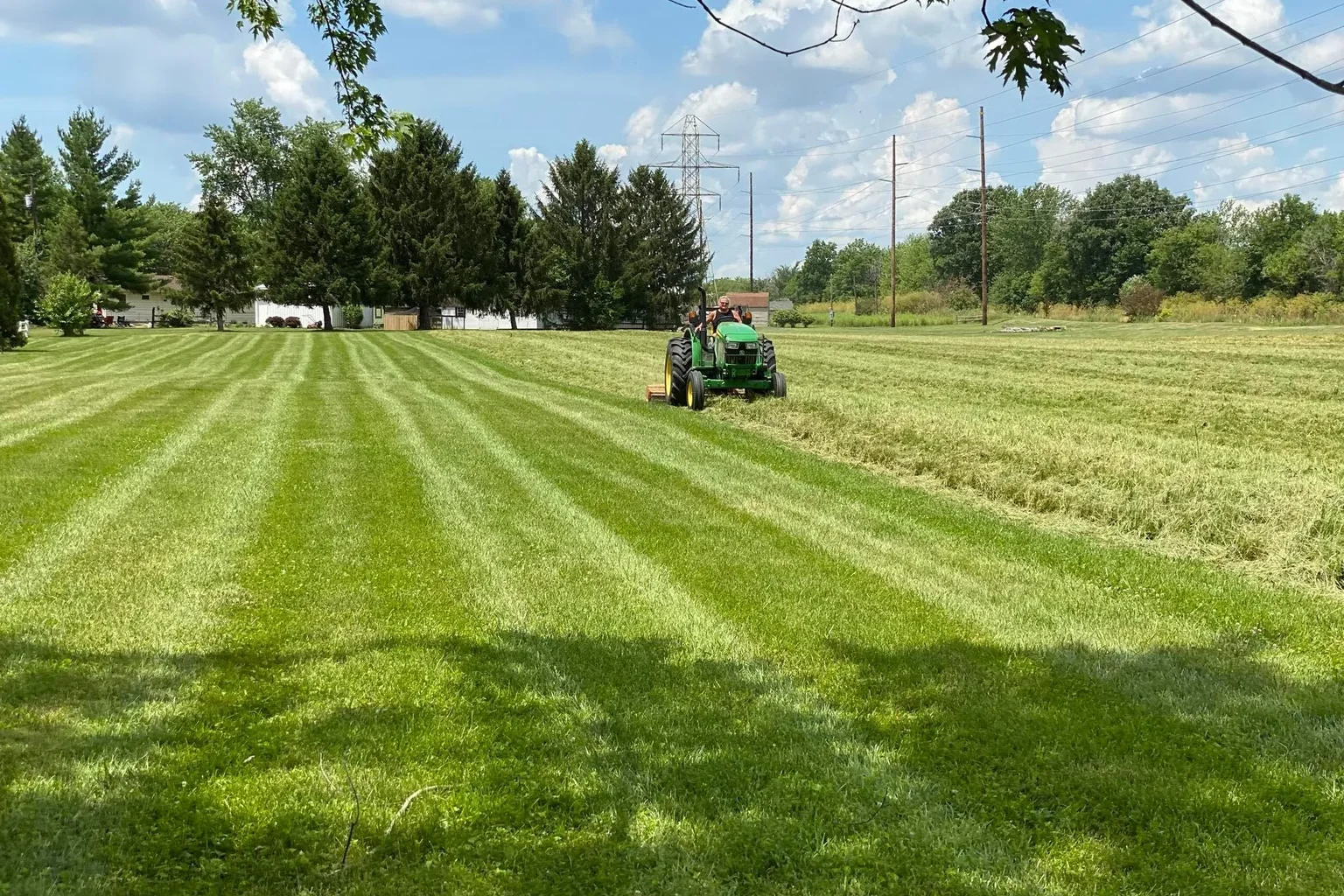
Agree on a few repeat photograph locations and a short visit note. Log areas completed, deferred work, observed obstacles, and approved extras. For commercial sites, include access windows and contact procedures.
Budget by scenario
Use the visit planner to compare visit counts with the same entered rates. Then separately consider seasonal changes and the first-cut premium. The tool models your assumptions; it does not forecast grass growth.
The mowing operator will assess access, ground conditions and what the equipment can cut before agreeing to the work. About this site.